
Most lawn problems get fixed in the wrong layer. A brown patch appears, so we water it. Weeds show up, so we pull them. The grass looks thin, so we throw fertilizer at it. That is the equivalent of patching CSS when the database is down.
I think of a lawn as a small production system with a visible interface and a hidden backend. The grass is the interface. The soil is the backend, and that is where nearly every bug lives. Below is how the stack works, the four operations that keep it healthy, and why a boring schedule beats weekend heroics.
The Stack: Grass Is the Interface, Soil Is the Backend
A grass blade is a solar panel. It makes sugars that feed the roots, and the roots pull water and nutrients out of the soil. Everything you see above ground depends on what happens below it.
Soil is not just dirt. It is minerals, air, water, organic matter, and a dense population of microbes, fungi, and worms that recycle nutrients. In the textbook ideal, about half of its volume is pore space shared between air and water.
That biology does real work. Microbes break clippings and dead roots down into nutrients the grass can use. Fungi extend the reach of the root system, and worms dig the channels that move air and water. A lawn fed only from a bag can look green while this workforce quietly shrinks, which leaves the turf dependent on the next feeding.
When the backend degrades, the interface reports it. Thin turf, puddles, and brown patches are all symptoms. Weeds are closer to error messages than invaders: plantain and knotweed favour compacted soil, and clover often signals low nitrogen.
The Toronto and Region Conservation Authority builds its lawn care guidance on one principle: nourish the soil.
Ontario adds a useful constraint. The province banned cosmetic pesticides in 2009, so homeowners cannot simply spray the symptom away. I think that is good engineering discipline. With the quick patch removed, the only option left is to fix the system.
Mowing Is a Rate Limit
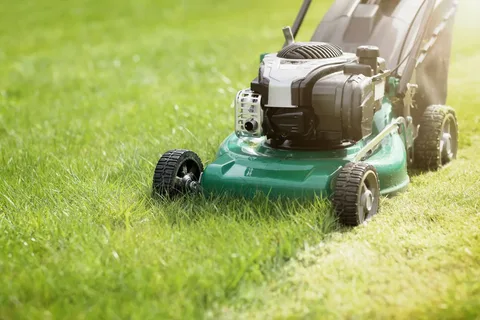
Every cut removes solar capacity, so mowing has a budget. The rule is simple: never remove more than one-third of the blade in a single cut.
Break that rule and the plant stops growing roots so it can regrow leaves. It behaves like any rate-limited system. Steady small requests are fine, and one large burst causes an outage.
Height matters too. The TRCA guidance recommends cutting at 7.5 cm, or about 3 inches. Taller grass shades the soil, slows evaporation, and blocks light from weed seedlings.
The arithmetic follows from those two numbers. To hold a lawn at 7.5 cm, you mow when it reaches about 11 cm. In a wet June that might be every five days, and in a dry August every two weeks. Mowing frequency is an output of growth, not a calendar setting.
Two cheap optimizations are worth adding:
- Keep the blade sharp. A dull blade tears the grass, which browns the tips and opens a path for disease.
- Leave the clippings. Short clippings break down quickly and return nitrogen to the soil for free.
Watering: Batch Jobs Beat Constant Polling
Daily light sprinkling is the most common mistake I see. It wets only the top centimetre of soil. Roots stay where the water is, and shallow roots fail in the first heat wave.
Deep, infrequent watering works better. The usual target is about 2.5 cm, or 1 inch, per week including rain, delivered in one or two sessions. The water sinks deep and the roots follow it down.
Measure before you tune. Put a straight-sided can on the lawn and time how long your sprinkler takes to fill it to 2.5 cm. That number is your weekly run time.
Timing matters as well. Early morning is best because less water evaporates and the blades dry quickly. Watering at night leaves the grass wet for hours, which invites fungal disease.
The system also degrades gracefully. Cool-season grasses such as Kentucky bluegrass and fescue go dormant in a summer drought. The lawn turns brown but stays alive, and it greens up when the rain returns. Dormancy is a feature. The real damage comes from flipping a lawn in and out of it with occasional watering.
Compaction Is a Throughput Problem
Mowing
Foot traffic, mowers, and heavy clay squeeze the pore space out of soil. Water runs off instead of soaking in. Roots cannot push through, and the soil life that cycles nutrients runs short of air.
Soil Preparation
The test takes ten seconds. Push a screwdriver into moist soil. If it resists, the soil is compacted.
Core Aeration
The fix is core aeration. A machine pulls out small plugs of soil and leaves them on the surface, which opens channels for air, water, and roots. Spike tools are a poor substitute because they push soil sideways and can make compaction worse.
Suitable Season
For cool-season lawns, early fall is the best window. The soil is still warm, the air is cooler, and the grass is building roots.
OverSeeding
Aeration pairs well with overseeding. Seed falls into the holes and germinates in contact with soil. Dense turf is also the best weed control available, because it leaves weeds no light and no room.
Thatch Removal
Watch the thatch layer too. A thin mat of dead stems is normal. Once it passes roughly 1.5 cm, it starts blocking water from reaching the soil.
Scheduling: Why Consistency Beats Heroics
A lawn rewards boring regularity. Here is a simple calendar for a cool-season lawn in southern Ontario.
| Season | Main jobs |
| Spring (April to May) | Rake lightly, sharpen the blade, start mowing once growth begins, seed bare spots |
| Early summer (June) | Mow high and often, leave the clippings |
| Midsummer (July to August) | Raise the cutting height, water deeply or allow dormancy |
| Early fall (late August to September) | Aerate, overseed, fertilize |
| Late fall (October to November) | Final cuts, clear leaves so the turf is not smothered |
Early fall is the most important row. Cool-season grass does most of its root building then.
The hard part is adherence. Skip two weeks in June and the one-third rule is already broken. You then scalp the lawn to catch up, and the roots pay for it.
That is why lawn services really sell cadence. Local Lawn, a small company serving Brampton and Mississauga, describes its weekly and bi-weekly plans as “scheduled lawn care that keeps your property consistently maintained.” Whether you hire help or do it yourself, the schedule is the product.
If I were hiring, I would ask three questions:
- What height do you cut at?
- How often do you sharpen your blades?
- Do you mulch the clippings or bag them?
The Lesson Outlives the Lawn
- I like the lawn as a teaching system because it punishes symptom-chasing so visibly. Every shortcut shows up within a season.
- It also has honest dashboards. Colour, density, weed species, and how water behaves after rain all tell you what the soil is doing. Read them before you intervene.
- Then make the smallest change at the lowest layer. Raise the mower before you buy fertilizer. Aerate before you reseed. Fix the schedule before you blame the weather.
- Expect a lag as well. Soil changes slowly, so most fixes take a full season to show. Judge the result next spring, not next weekend.
- The same habit works on a codebase or a team. Find the layer where the problem actually lives, and stop repainting the interface.
Frequently Asked Questions
1. How short should I cut my lawn?
Aim for about 7.5 cm, or 3 inches, for cool-season grass. Never remove more than one-third of the blade in one cut. If the lawn has grown too tall, bring it down over two or three mowings.
2. How often should I water?
Plan for about 2.5 cm of water per week, including rain, in one or two deep sessions. Water early in the morning. An established lawn can also be left to go dormant during a drought.
3. When is the best time to aerate in southern Ontario?
Early fall, from late August through September, is the best window. Spring is the second choice. Avoid aerating in midsummer heat, when the grass is already stressed.
4. Should I bag my grass clippings?
Usually not. Short clippings decompose quickly and feed the soil. Bag them only when the grass was badly overgrown and the clippings form clumps, or when the lawn shows signs of disease.
5. Why do weeds keep coming back?
Weeds fill gaps that thin turf and stressed soil leave open. Mowing high, overseeding, and aerating close those gaps. In Ontario, where cosmetic pesticides are restricted, a dense lawn is the main defence.